The International Standard for Phytosanitary Measure
“Guidelines for regulating wood packaging material in the
international trade” (ISPM15)
was adopted by the FAO’s Interm Commission on Phytosanitary
Measures in March 2002. It is now for each country and trading
bloc to decide upon implementation of these measures, and the
indications are that most major trading nations will have regulations
based on ISPM15 in place
within the next couple of years.
The approved measure that have been adopted are as follows:
Heat treatment of wood packaging which requires heating of the timber to a minimum core temperature of 56 ?C for a minimum of 30 minutes (HT)
Fumigation, using Methane Bromide (MB) to the relevant specification. ISPM15 also recommends that wood should be debarked prior to treatment by an approved measure (DB).
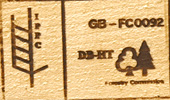
In order to prepare the U.K. wood packaging industry, and to assist exporters, the Forestry Commission introduced the U.K. Wood Packaging Material Marking Programme, on 1st October 2001. The Programme is entirely voluntary at present but in time it will become statutory. P.H.Pallets meet the required standards and have been authorised to use the ISPM15 mark which identifies the country by the ISO-2-letter code (GB), a unique manufacture’s registration number 0092 assigned by the Forestry Commission, the code for the approved measure DB-HT and the Forestry Commission ©. ISPM15 recommends that countries need not impose regulations on neighbouring countries with a similar plant health status, nor on internal movements. However, it is up to each country to determine its own regulations. But it is expected that within the EU domestic movements, within and between the Members States will not be subject to ISPM15 measures and that existing requirements for import into the U.K., for example which requires freedom from bark or kiln-drying, will continue. However, companies that operate in global markets may wish nevertheless to source heat treated or fumigated pallets, in order that they have the option to send pallets outside the EU, or to ensure that they can be re-imported.
Due to concerns about Pine Wood Nematode found in wood packaging material shipped from USA, Canada, China and Japan, the European Commission introduced regulations to control the import of wood packaging with effect from 1st October 2001. Wood packaging coming into the EU from these four countries has to be either heat treated, chemically impregnated, or fumigated, and clearly stamped, stating where and by whom the treatment was carried out. If wood packaging is used to export goods from within the EU to one of these four countries, they can only be re-imported if it can be proved that they originated from within the EU. The U.K. Forestry Commission stamp is, is therefore a very valuable safeguard in this circumstance. Of course, once the International Standard for Wood Packaging has been implemented by the EU, then the pallets coming into the EU (from any source) will have to be stamped that they have been produced from Debarked wood and had one of the two approved treatments. Ie. DB-HT or DB-MB.
Work is going on within FEFPEB (the European Association of Wooden Pallet and Packaging Manufacturers) – to encourage the introduction of Programmes similar to the U.K. Wood Packaging Material Marking Programme throughout Europe. Only wooden pallets and packaging stamped “DB-HT” or “DB-MB” will meet the current Chinese regulations (with the accompaniment of a Phytosanitary Certificate from the FC) and ISPM15 (No Phytosanitary Certificate required just the approved wood mark). Alternative measures, such as Chemical Pressure Impregnation (CPI) or irridation may be approved if sufficient scientific evidence of their effectiveness can be proven. For the time being, only the two approved measures may be used. Although the necessary introduction of Phytosanitary regulations will inevitably lead to an increase in the cost of wooden pallets and packaging, this increase will still result in wood packaging being considerably cheaper than alternatives, such as plastic packaging. The latest development is that Canada has announced its intention to adopt ISPM15, with effect from 1st June 2003. New Zealand has announced (April 2003) new regulations including acceptance of wood packaging material complying with ISPM15. The USA and EU have indicated that they will soon follow, and it is highly likely that most other nations and trading blocs will implement ISPM15 in the near future. It is, therefore, imperative to all USERS and PURCHASERS of wooden packaging that they PLAN NOW, so as to ensure that their wood packaging used in future shipments is fully compliant with the regulations. There are major logistical and supply line issues to consider.
ISPM15 applies to all wooden packaging, including pallets (either new or repaired), packing cases dunnage. The early introduction of the UKWPMMP has ensured that U.K. wood packaging suppliers are organised to meet your requirements and guarantee the uninterrupted supply of packaging essential to the U.K.’s export trade. Although there are inevitable increased costs for the treatment of packaging, in order to protect the world’s forests and environment, it remains the case that wood packaging is considerably more economical and is flexible enough to meet exporters’ packaging requirements.
Global guide to ISPM15 implementation and import regulations for wood packaging materials. Release Date for this information: See news section for latest ISPM15 Global Updates (click here)
REPAIR OF ISPM15 COMPLIANT WOOD PACKAGING MATERIAL
Following repair, the entire item of wood packaging must be re-treated and re-marked. This includes repaired, recycled and re-manufactured wood packaging material. For example, pallets marked HT that are repaired must be re heat treated in their entirety (i.e., the complete pallet). The accreditation mark of the repairer must be applied, and all previous ISPM15 marks must be removed. (click here)
ISPM15 - International Phytosanitary Standard for Wood Packaging
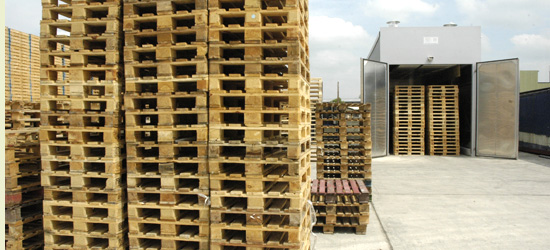
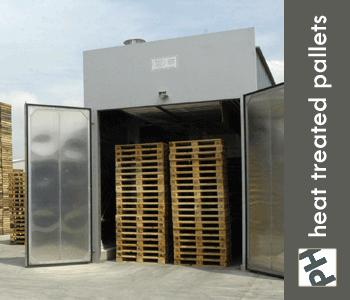
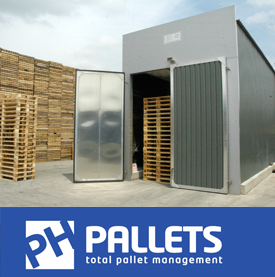
We are able to offer our customers the latest ispm15 heat treatment services to: ISPM15 "International Phytosanitary Standard for Wood Packaging" PHPallets have the ability to process thousands of heat treated pallets to ISPM15 every week due to our state of the art onsite kilns. See news section for latest ISPM15 Global Updates (click here)
|